Winter is the perfect time for Laser Hair Removal, which we think is one reason to love the season. In fact, it’s perfect for all laser treatments in general, as after a treatment you’re required to avoid UV exposure, so due to the lack of sunlight during January and February, you won’t be stopped from attending any outdoor activities.
We’re answering all the questions you may have about Laser Hair Removal, so you can achieve your hair-loss goals before sunnier days are here.
How does Laser Hair Removal work?
Laser Hair Removal works by emitting a wavelength of high energy light into each individual hair follicle. As the lasers are attracted to pigment, the laser light absorbs the colour of the hair and then is converted into heat energy. It’s the heat that lastingly removes the hair follicle and changes the environment in which the hair grows, giving you thinner hair regrowth.
What areas can be treated?
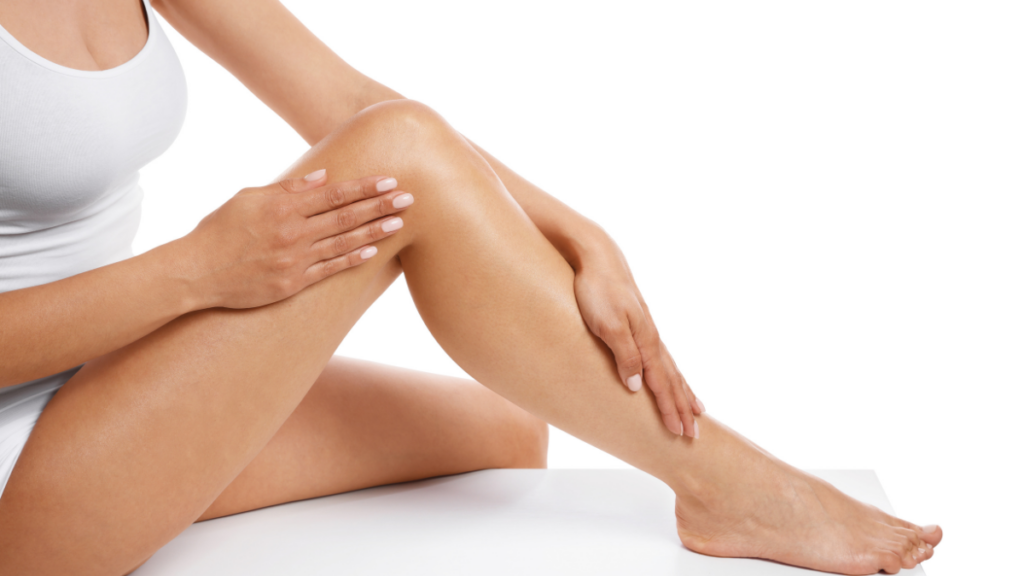
This treatment is very versatile in the areas it can treat and a trained practitioner will be able to work safely and effectively to target hair on almost all parts of the body. Laser Hair Removal can also be used to diminished unwanted hair on the face.
Some treatment areas are:
- The face: ideal for beard sculpting, side burn removal, or upper lip hair or chin
- The arms: including the upper, under and lower arms
- Pubic and bikini line
- The bottom
- The back and chest
- Abdominal
It’s an especially popular treatment for those who are transitioning, are suffering with PCOS or hirsutism.
How many treatments will I need?
This differs depending on the area treated and the thickness of the hair. We always recommend a course of treatments as this allows our practitioners to understand the cycle of hair growth your hair is in.
We often recommend a course of 6-8 treatments, spread out every 2-4 weeks as this means we’ll be able to produce the best results.
There are the different stages of hair growth, they are called:
ANAGEN
The ‘growth’ stage – the longest stage where hair is growing from the root.
CATAGEN
The transitional phase: growth slows down and the follicle shrinks.
TELOGEN
The old hair falls out and new hair begins to grow from the same hair follicle.
Why lasers?
Lasers have become the go-to non-invasive treatment over the past few years, offering quick treatment times with minimal discomfort and minimal downtime. They are also able to treat a wide range of skin types.
When will I start seeing results?
You should begin seeing results in the weeks after your treatment (between 7-10 days). As this gives the hair time to naturally fall out.
Does it use an ablative or non-ablative laser?
You often hear treatments or experts discuss ablative or non-ablative lasers and this is the process in which the laser is directed. An ablative laser is surface based, the laser only works on the epidermis, or top layer on the skin. A Non-Ablative laser is a lot more powerful and potent, and instead works beneath the surface, targeting the dermis to address skin concerns. At 111 Harley St., we are home to both types of lasers, but as Laser Hair Removal is an atraumatic treatment, our Aestheticians use a non-ablative laser.
Will it burn my skin?
Laser Hair Removal has become so advanced that it does not damage the surrounding skin – only the hair follicle. We use a Cynosure Laser which is the globally leading brand (and the same company that brought us many other much-loved treatments, such as Potenza). Our Laser Hair Removal machine has skin-scanning technology and is, therefore, atraumatic and able to identify each hair.
What happens after my treatment?
After the treatment, there is minimal redness and irritation which should entirely disappear within 24 hours. SPF should be applied as usual, but all patients can resume their daily activities, but we advise not undergoing any intensive activities.