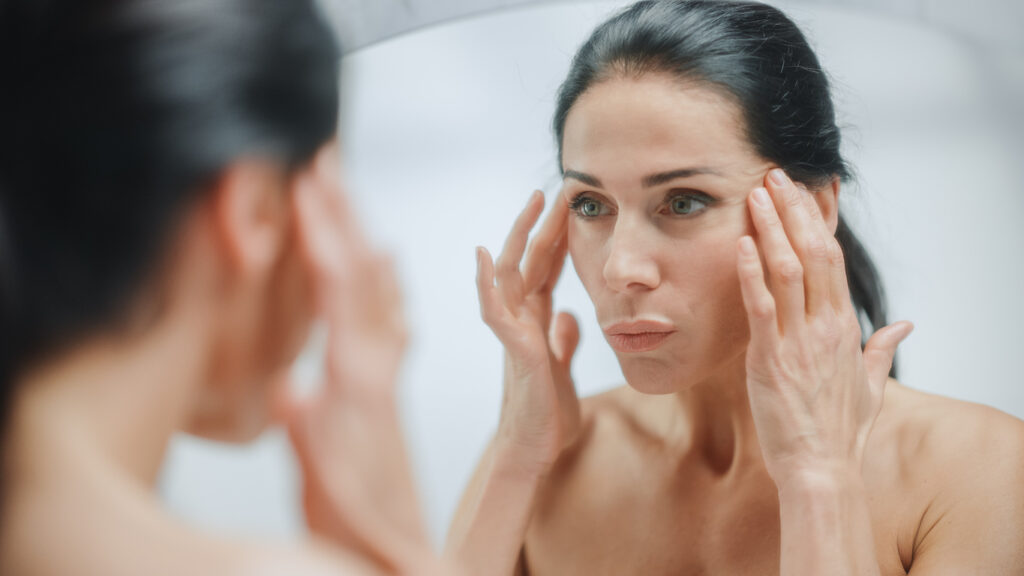
Tight, lacklustre, withdrawn skin? This is often a tell a tale sign that your skin isn’t performing at its optimal and it can be down to 2 concerns – you’re experiencing either dryness or dehydration, and yes the two aren’t the same thing. Many people get the two confused and this is why our practitioners weigh in on the difference between the two.
DRY SKIN vs DEHYDRATED SKIN On the surface, the skin looks dull, tight, irritated and in some cases flakey and this down to having dry skin. Dry skin is defined as having a lack of oil-producing glands that provide your skin and body with the lubrication it needs. As the enzymes on the skin’s surface aren’t able to function properly it means that dead skin sits on the surface, giving way to uneven texture and an onslaught of concerns. Made worse by environmental conditions such as the weather or hot water – dry skin can become extremely sensitive and irritated towards the changes that it is surrounded by. Dehydrated skin on the other hand simply lacks the water it needs to function. Dry skin, as a skin type, lacks oil and moisture, dehydrated skin, as a skin condition, lacks water – it is important to note that you can still have dehydrated and oily skin (the two are commonly linked).
Dry Skin
As there are many causes for dry skin such as family history, excess bathing, sun exposure and climate extremes, it is recommended to increase the moisture applied to the skin but to also focus on your skin barrier. Your skin barrier acts as the blockade from the environment that your skin faces on a daily basis and when compromised, the skin will suffer. Focus on encouraging ingredients such as ceramides, antioxidants and oils to the skin to support strengthening the barrier. The 111SKIN Reparative range is an excellent option as it is infused with the patented formula, created by Founder and Director of 111 Harley St. Dr Yannis Alexandrides, NAC Y2, with antioxidant capabilities to heal and moisturise the skin. The Y Theorem Day Cream uses vitamins, antioxidants and a hyaluronic acid-infused formula to nourish and restore the complexion.
Dehydrated Skin
Experiencing redness, congestion or inflammation are also tell-tale signs that the skin is dehydrated and there are many at-home and in-clinic treatments that you can undergo in order to truly hydrate the skin. When at home make sure that you are hydrating the skin as much as possible with ingredients such as Hyaluronic Acid, Glycerin, lactic acid and squalane. Implementing facial treatment masks such as The Molecular Hydration Mask for an overnight injection of volumising ingredients such as Vitamin C and Wu Zhu Yu Extract to nourish and plump the complexion.
Mesotherapy
A minimally invasive treatment that injects a fine needle to the dermis before saturating the skin with a vital cocktail of vitamins, minerals, amino acids and antioxidants to support the skin in nourishment it needs. Skin will be left healthy, balanced and revitalised.
Profhilo
Drawing on the efficacy of Hyaluronic Acid, Profhilo involves injecting Hyaluronic acid into the skin to help improve texture, laxity, lines and dullness. With no downtime necessary, it is the perfect in-clinic pick me up that is a popular solution to dehydrated concerns.
PRP
Commonly known as Vampire Facial or Platelet Rich Plasma, it utilises your body’s own proteins and platelets withdrawn from your blood and injects it back into the skin to promote a healthy, radiant and luminous complexion.
Our Practitioners Share Their Advices on Dehydrated Skin.