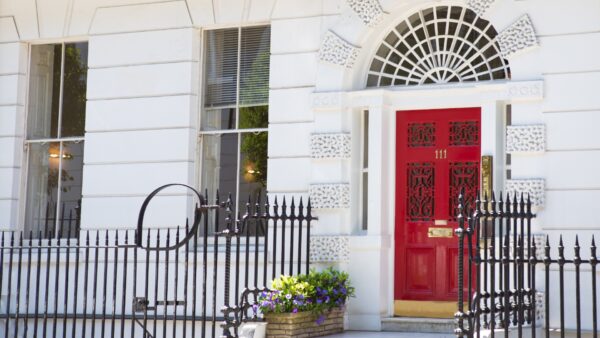
Corporate Social Responsibility has become a ubiquitous business term, appearing in annual reports, marketing materials, and mission statements across industries. Yet the phrase itself often obscures more than it reveals. At 111 Harley St., developing Beautiful Impact required confronting what CSR genuinely means in practical, realistic terms… stripping away corporate jargon to understand the actual commitments and challenges involved.
Defining CSR in the Modern Business Context
Corporate Social Responsibility, at its essence, represents organisations’ commitment to conducting business in ways that account for social, environmental, and economic impacts beyond profit generation. It acknowledges that companies operate within broader ecosystems (communities, environments, societies), and bear responsibility for their effects on these systems.
Modern CSR encompasses several interconnected dimensions. Environmental responsibility addresses resource consumption, waste generation, carbon emissions, and ecological impact. Social responsibility considers labour practices, community engagement, human rights, diversity and inclusion, and contribution to societal wellbeing. Economic responsibility involves transparent governance, ethical business practices, fair treatment of stakeholders, and sustainable economic contribution.
These dimensions increasingly crystallise into ESG frameworks – Environmental, Social, and Governance criteria that investors, regulators, and stakeholders use to assess organisational performance beyond traditional financial metrics. ESG represents evolution from voluntary CSR initiatives toward standardised, measurable accountability for corporate impact across multiple dimensions.

The Reality Behind the Rhetoric
The gap between CSR rhetoric and reality remains substantial across many industries. Companies announce ambitious commitments while implementing minimal substantive changes. Glossy sustainability reports highlight selective achievements while obscuring problematic practices. “Greenwashing” and “social washing” describe phenomena where organisations invest more in appearing responsible than in actually being responsible.
Authentic CSR requires several challenging commitments. First, genuine resource allocation – dedicating meaningful budget, personnel, and organisational attention, rather than treating CSR as a marketing afterthought. Second, integration into core operations rather than peripheral charitable activities, disconnected from the primary business. Third, transparency about both progress and shortcomings, resisting the temptation to present idealised versions of organisational impact.
Perhaps most challenging of all is the fact that authentic CSR demands accepting short-term costs that sometimes accompany long-term benefits. Ethical supply chains cost more than exploitative alternatives. Environmental sustainability requires investment that doesn’t immediately boost profits. Comprehensive stakeholder consideration complicates decision-making compared to pure profit maximisation.
From Compliance to Commitment
The most meaningful distinction in CSR separates organisations that pursue compliance from those that embrace genuine commitment. Compliance-driven CSR does the minimum required to satisfy stakeholders, avoid criticism, or meet regulatory requirements. Commitment-driven CSR integrates social and environmental responsibility into organisational identity, making it inseparable from how the company understands itself and its purpose.
Commitment-driven CSR recognises that social responsibility and business success aren’t inherently contradictory. Purpose attracts talent, inspires loyalty, differentiates brands, and creates sustainable competitive advantages. Organisations genuinely committed to positive impact often outperform those that treat CSR as an obligation or a marketing strategy.
Beautiful Impact as Applied CSR
At 111 Harley St., Beautiful Impact represents our translation of CSR principles into concrete, sustained action. Rather than broad environmental and social commitments across all dimensions, we’ve focused strategically on global welfare… an area where our resources and commitment can create meaningful, measurable impact. This focus doesn’t diminish CSR’s broader dimensions, but acknowledges realistic organisational capacity and authentic passion.
Beautiful Impact embodies commitment over compliance, integration over isolation, and authenticity over performance: transforming CSR from a corporate buzzword into lived organisational reality.
Explore how Beautiful Impact translates Corporate Social Responsibility principles into meaningful practice. Visit our Corporate Social Responsibility page to learn more about our commitments and approach.