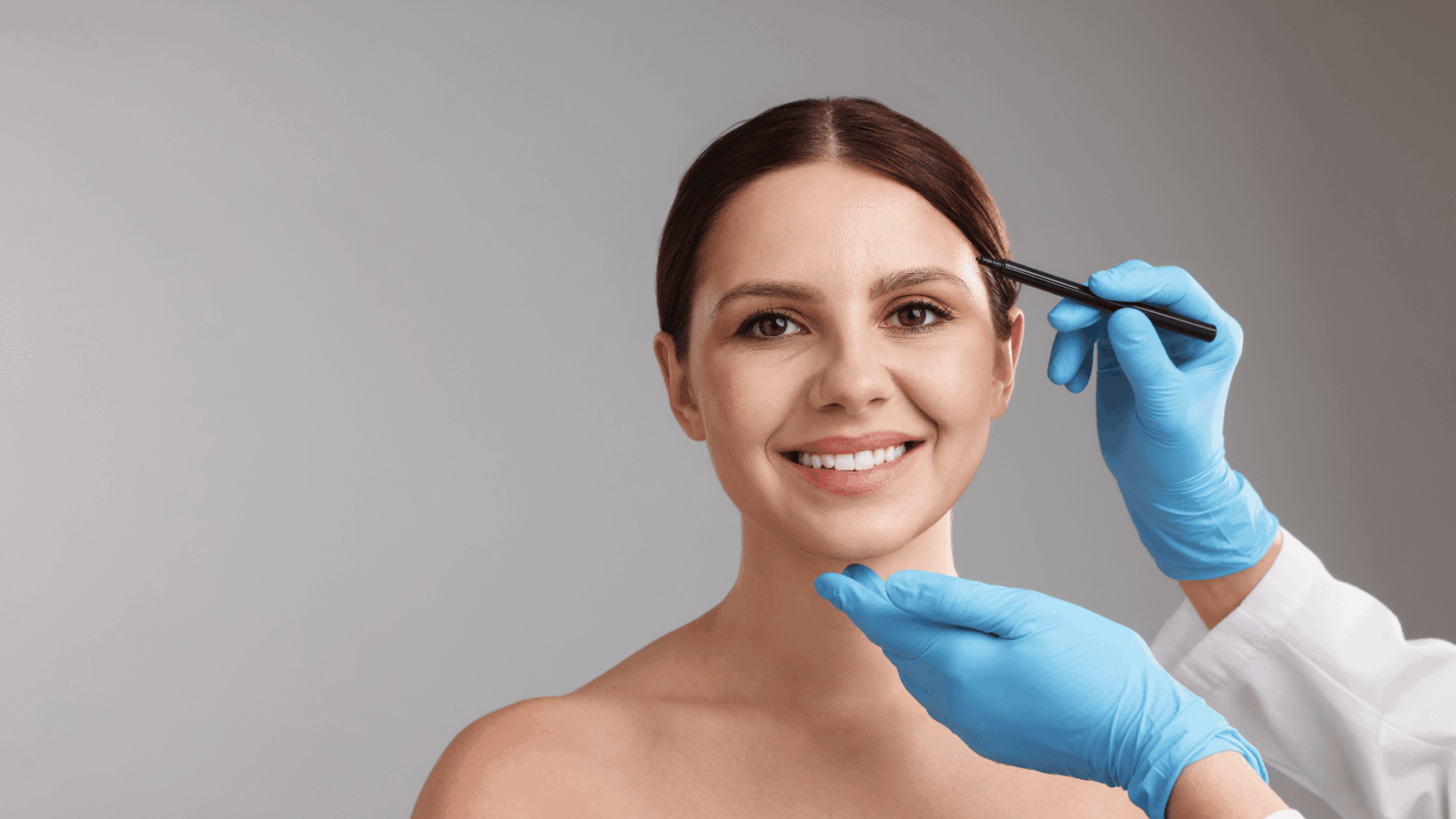
The idea of facial harmony, where the features of the face relate to one another in a balanced, proportionate way, has long been central to discussions of physical beauty. A face is generally perceived as more attractive when its features work together in pleasing balance, rather than simply being striking on their own.
That said, beauty is subjective and influenced by many factors. These include, but are not limited to, facial symmetry, skin quality, cultural standards, and personal preference. For historical context, the Golden Ratio was popularised in 1508 by Luca Pacioli, but it is only one of many reference points.
In modern facial aesthetics, the goal is not to apply a rigid mathematical formula. Instead, the focus is on making subtle refinements that enhance overall proportion, symmetry, and balance, respecting each individual’s unique anatomy and identity. True facial harmony is about bringing out the best in a person, not making everyone look the same.
How The Nose Helps Anchor Facial Proportions
Golden Ratio proportions (i.e., proportions that are close to 1.618) take into account the relationship between the length of the nose and the lips.
Since the nose sits at the centre of the face, its shape and size can influence overall facial balance. A study published in JAMA Facial Plastic Surgery in 2016 found that for the best aesthetic balance, the ideal nose length should be about one-third the length of the face. Another study also showed that the width of the nose should be about a fifth of the width of the face.
Multiple reports indicate that many patients feel unhappy with their facial symmetry. This makes the pursuit of improved symmetry a common aesthetic goal for many individuals. To be precise, a study by the American Society of Plastic Surgeons found that rhinoplasty is the most common type of facial plastic surgery, with over 220,000 procedures performed in the United States in 2020 alone. These procedures were primarily aimed at enhancing facial harmony, rather than simply reducing nose size.
Since the Golden Ratio should serve as a guiding principle, a responsible plastic surgeon will always aim to achieve balance and symmetry that complement a patient’s natural facial structure and features, rather than creating a uniform, “copy-and-paste” appearance according to the rule.
Chin Definition And Its Impact On Facial Aesthetics
Aside from the nose, the chin is also a major factor in the overall structure and balance of the face. As reported in a study published by the American Society of Plastic Surgeons, chin augmentation procedures have increased by over 60% in the past decade, indicating that more people are becoming aware of the importance of the chin in facial aesthetics. Research also suggests that a balanced chin projection is a significant factor in determining attractiveness, especially in profile views (from the side).
If you are not particularly content with your chin’s definition, a subtle chin procedure such as a chin augmentation using an anatomical implant or chin liposuction, can help achieve improved harmony and proportion. It can also help counterbalance a more prominent nose or enhance cheek contouring by “lifting” the midface.
Having an enhanced jawline can also greatly help to bring balance to your face. Especially as a more defined jawline can make the chin look more proportionate and better framed, even if the chin itself has not changed. It can also reduce the appearance of a weak or recessed chin by improving overall lower-face structure and contour.
A well-contoured jawline is usually obtained through either jaw reduction or jaw contouring procedures.
Restoring Facial Balance Through A Facelift
It is only natural that as we get older, the shape of our face changes. We start to lose volume, and our skin becomes looser. Even the bones in our face can shift ever so slightly. This can lead to sagging in the lower face, flatter-looking cheeks, and a less defined jawline, all of which can disrupt your facial balance. Multiple studies have shown that facial volume loss begins as early as the 30s. By the time we reach our 50s, we have already lost roughly 30% of facial fat in key areas, such as the cheeks and temples.
Contrary to popular belief, a facelift is not always about pulling the skin tight like it used to be. Instead, it is about gently restoring your facial structure, lifting and repositioning your facial volume, smoothing out your facial contours, and bringing back the natural angles of your face.
The Power Of A 360 Degree Consultation At 111 Harley St.
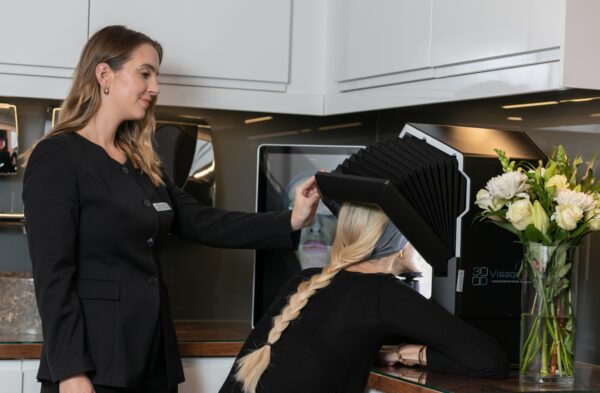
At 111 Harley St., we provide a 360° consultation, part of The 111 Method, which is a comprehensive, full-spectrum assessment and treatment planning session primarily used for facial aesthetics and plastic surgery patients. We believe the best results are achieved through a personalised plan that begins well before any procedure and continues long after treatment is complete.
During your consultation, you will meet with our expert doctors, who will craft a bespoke plan tailored precisely to your individual needs and goals. This process includes a detailed facial assessment, alongside a thorough review of your medical history and relevant lifestyle factors. Bear in mind that at 111 Harley St. our bespoke plans are not about achieving “societal beauty” or perfection. Instead, they focus on enhancing the facial features that make you unique.
Many of our consultations also often involve input from multiple experts, to ensure a well-rounded and considered approach. Rather than focusing solely on surgery, it explores all suitable options, including injectables, device-based treatments, skincare, and combination therapies to ensure long-term and satisfactory results.
That said, a responsible consultation is not merely a pathway to a procedure. If our assessment suggests that surgery is not in your best interest, or that your goals can be met through less invasive means, we will advise you accordingly.
Our clinicians are trained to decline treatment where appropriate, and we consider this ethical rigour to be as important as any surgical skill we possess. When you sit with us, you are entering a partnership defined by honesty, transparency, and a shared commitment to outcomes that serve you first. That is the 111 Harley St. Method.